Cuicocha Ecuador: Discover a Volcanic Crater in the Andes
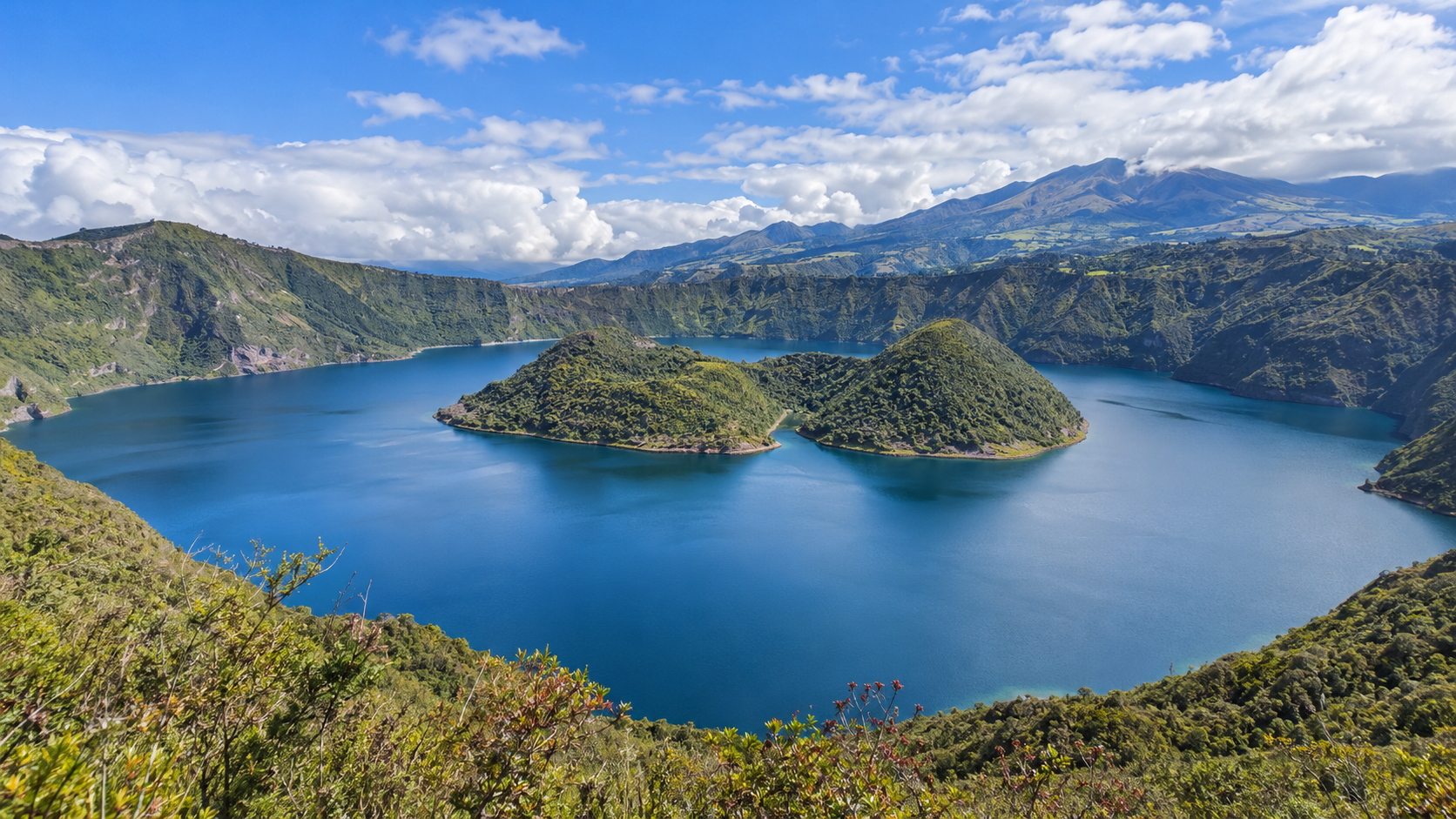
Some places reveal their beauty immediately, while others become far more interesting once you understand what you are actually looking at. Cuicocha, Ecuador, belongs to the second group. At first sight, it is easy to be impressed by the dark blue water, the steep walls of the caldera and the two islands rising from the center of the lagoon. Yet the real character of Cuicocha goes much deeper than the view itself.
Located in the northern Ecuadorian Andes, near Cotacachi in the province of Imbabura, Cuicocha is a volcanic caldera filled by a remarkable lake and surrounded by high-altitude Andean landscapes. Trails follow different sections of the crater, viewpoints open onto the lagoon from above, and the surrounding mountains give the entire area a sense of scale that photographs rarely capture completely.
Cuicocha is also part of a much larger geological and cultural landscape. The Cotacachi-Cuicocha volcanic complex lies within Cotacachi-Cayapas National Park, while the wider Imbabura region has gained international recognition for its geological importance. For travelers interested in hiking, photography, nature, culture or simply discovering places beyond Ecuador’s best-known attractions, Cuicocha offers a particularly rewarding way to experience the northern Andes.
What Is Cuicocha?
Cuicocha is a volcanic caldera located at the foot of Cotacachi Volcano in northern Ecuador. Its appearance today is the result of a long volcanic history that shaped the crater and eventually created the landscape visitors see now: an expansive body of water enclosed by steep slopes and surrounded by Andean vegetation.
In the center of the lagoon are two distinctive islands named Teodoro Wolf and José María Yerovi, separated by a narrow channel known as the Canal del Ensueño. Together, they form one of the most recognizable features of Cuicocha and help distinguish it from other lakes in the Ecuadorian Andes.
What makes Cuicocha particularly interesting is the combination of geology and landscape. You are not simply looking at a mountain lake. You are standing on the edge of a volcanic system whose history shaped the entire area. The water, crater walls, islands, native vegetation and surrounding peaks are all part of the same geological story.
What Does the Name Cuicocha Mean?
The origin of the name Cuicocha is one of the details that often creates curiosity among visitors. Ecuador’s official tourism information has associated the Kichwa name with meanings such as “Lagoon of the Gods” or “Rainbow Lagoon.” Other popular interpretations can also be found in tourism literature and local references, which is why it is better to understand the name as part of a broader cultural context rather than reduce it to a single literal translation.
What is more important is the relationship between Cuicocha and the communities that have lived in this part of the Andes for generations. The lagoon is not an isolated geological attraction disconnected from the surrounding territory. It belongs to a landscape where indigenous culture, agriculture, mountains and volcanic geography are deeply connected.
That connection becomes especially noticeable when Cuicocha is combined with nearby destinations such as Cotacachi and Otavalo. A visit to the lagoon can therefore become much more than a nature stop; it can serve as an introduction to the cultural identity of northern Ecuador.
Why Are There Two Islands Inside Cuicocha?
One of the first details visitors notice when looking down from the crater rim is the presence of two islands rising from the center of the lake. Known as Teodoro Wolf and José María Yerovi, they are separated by the narrow Canal del Ensueño and have become an essential part of Cuicocha’s visual identity.
From the viewpoints above the crater, the islands help reveal the enormous scale of the lagoon. Their position in the center of the water also makes the landscape feel very different from a conventional high-altitude lake, reminding visitors that Cuicocha is the result of complex volcanic processes rather than an ordinary mountain basin.
For photographers, the islands are especially valuable because their appearance changes according to the weather and light. On clear mornings they can stand sharply against the water, while clouds and mist can make them appear almost hidden within the crater. This constant variation is one reason Cuicocha feels different every time the weather changes. Markdown pegado
Hiking at Cuicocha: One of the Best Ways to Experience the Crater
Seeing Cuicocha from one of its main viewpoints is already impressive, but walking through the landscape offers a much deeper understanding of the place. Hiking allows you to move beyond a single panoramic perspective and experience how the crater changes as you travel around it.
The trails pass through high Andean vegetation and open onto different views of the lagoon, the islands and the surrounding mountains. Some sections reveal wide panoramas of the crater, while others feel more enclosed by vegetation and changing terrain. This variety makes the hike less about reaching one specific viewpoint and more about experiencing the landscape gradually.
For travelers who enjoy walking, Cuicocha is therefore much more than a quick stop for photographs. Spending time on the trails gives the destination a completely different rhythm and allows you to appreciate small details that are easy to miss from the main viewpoints.
What Is the Cuicocha Hike Like?
The Cuicocha hike follows sections of the crater through high-altitude terrain, with continuous changes in elevation, vegetation and scenery. As the route progresses, the lagoon appears from different angles, creating a series of natural viewpoints rather than a single iconic perspective.
The surrounding landscape is typically Andean, with open mountain terrain, native plants and weather that can shift quickly. On one section you might have a completely clear view of the water, while a few minutes later mist can begin moving across the crater.
That unpredictability is part of the experience. Rather than expecting a perfectly controlled scenic walk, visitors should approach Cuicocha as a living mountain environment where light, clouds, wind and temperature constantly influence the landscape.
Do You Need to Complete the Entire Hike?
No. One of the advantages of visiting Cuicocha is that the experience can be adapted to different types of travelers. You do not need to complete a long trekking route in order to appreciate the crater.
Shorter walks and viewpoints still provide beautiful perspectives of the lagoon, making Cuicocha accessible for travelers who have limited time or prefer a more relaxed visit. Those who want a more active experience can dedicate a larger part of the day to the trails and explore more of the crater.
The best approach is to choose a route based on your available time, weather conditions, physical condition and the rest of your itinerary. Cuicocha does not need to be experienced in the same way by every traveler. Markdown pegado
What Else Can You Do at Cuicocha?
Although hiking is one of the most rewarding ways to experience Cuicocha, the destination offers several other ways to enjoy the landscape. Some visitors prefer to spend more time at the viewpoints, while others are interested in photography, nature observation or seeing the crater from a different perspective.
This flexibility is useful when Cuicocha forms part of a larger itinerary through northern Ecuador. You can choose to spend several hours exploring the area or simply incorporate the lagoon into a broader day that also includes Cotacachi or Otavalo.
Enjoy the Viewpoints
For travelers who do not plan to hike extensively, the viewpoints provide one of the easiest ways to appreciate the scale of Cuicocha. From above, you can clearly see the outline of the caldera, the two islands and the surrounding mountains.
The scenery changes throughout the day depending on cloud cover and light. Clear conditions can reveal the full shape of the crater, while mist often creates a more dramatic atmosphere. For photography, both situations can be equally interesting.
Taking time at the viewpoints rather than immediately moving on allows visitors to notice how dynamic the landscape really is.
Experience the Lagoon from the Water
Boat rides have traditionally been offered as another way to experience Cuicocha. Viewing the crater walls from water level creates a completely different sense of scale compared with standing on the rim.
From below, the steep slopes surrounding the lagoon appear much more imposing, and the two islands become more prominent within the landscape. Because operational conditions can change, it is best to confirm locally whether boat trips are available on the day of your visit.
Even if you choose not to take a boat, understanding the crater from different perspectives helps make the geology of Cuicocha easier to appreciate.
Nature and Photography
Cuicocha is part of a protected Andean environment, which means the experience extends beyond the lagoon itself. Native vegetation, clouds, mountain light and changing weather contribute as much to the atmosphere as the water and crater walls.
For photographers, the destination rewards patience. A view that looks completely covered in cloud can transform within minutes as the wind moves through the crater. Likewise, bright midday conditions can make the landscape feel completely different from the softer light of the morning.
Sometimes the best way to experience Cuicocha is simply to stay in one place long enough to watch the landscape change. Markdown pegado
Cuicocha Is Part of a Much Larger Natural Landscape
Understanding where Cuicocha is located helps explain why the destination feels so distinctive. The lagoon forms part of Cotacachi-Cayapas National Park, a vast protected area that extends across Imbabura and Esmeraldas provinces and connects very different ecosystems.
The Cotacachi-Cuicocha volcanic complex is also part of the geological identity of Imbabura, a province characterized by volcanoes, lakes, valleys and strong cultural traditions. In 2019, Imbabura was recognized as a UNESCO Global Geopark, highlighting the relationship between its geological heritage and the communities that inhabit the region.
This wider context gives Cuicocha more meaning. Rather than viewing it as a single attraction, it makes more sense to understand the lagoon as one part of a much larger Andean territory shaped by volcanic activity, biodiversity and human history.
Cuicocha, Cotacachi and Otavalo: A Perfect Combination
One of Cuicocha’s biggest advantages is its location. The lagoon can easily be combined with Cotacachi and Otavalo, allowing travelers to experience nature and culture within the same part of northern Ecuador.
This makes the journey especially valuable for international visitors who want to see more than landscapes alone. In a single day or short itinerary, it is possible to move from volcanic scenery to local craftsmanship, indigenous traditions and small Andean towns without covering enormous distances.
Combine Cuicocha with Cotacachi
Cotacachi is the natural gateway to Cuicocha and is located only a short drive from the lagoon. The town is particularly known for leather craftsmanship, local shops and its relaxed atmosphere, making it an easy complement to a morning or afternoon spent around the crater.
A visit can therefore balance nature and local culture very naturally. You might begin the day walking through Andean landscapes at Cuicocha, then continue toward Cotacachi for lunch, explore its streets and discover the craftsmanship for which the town is known.
Rather than feeling like two unrelated attractions, Cotacachi and Cuicocha work well together because they reveal different sides of the same region.
Combine Cuicocha with Otavalo
Otavalo adds another important cultural dimension. The city and surrounding communities are closely connected with Kichwa traditions and are internationally known for textiles, crafts and the Plaza de Ponchos market.
Combining Otavalo with Cuicocha creates a particularly complete introduction to northern Ecuador. The journey can include volcanic landscapes, indigenous culture, local craftsmanship and Andean towns within a relatively compact area.
For travelers who have limited time in Ecuador, this combination offers an efficient way to experience several layers of the country without turning the day into a rushed checklist of attractions. Markdown pegado
How to Get to Cuicocha
Cuicocha is located near Cotacachi in Imbabura Province, north of Quito. The most common route follows the Pan-American Highway toward northern Ecuador before continuing through Cotacachi and then toward the lagoon.
From Cotacachi, the access road continues for approximately 12 kilometers to Cuicocha. The journey itself already begins to reveal the transition from town to mountain landscape as the road gradually climbs toward the crater.
Independent travelers can organize the route themselves, while visitors unfamiliar with Ecuador may prefer to include Cuicocha within a guided or organized itinerary, particularly when combining the lagoon with hiking, Cotacachi and Otavalo in the same day.
What Should You Wear and Bring to Cuicocha?
Weather in the Ecuadorian Andes can change quickly, and Cuicocha is no exception. A morning can begin with sun and clear views before becoming cooler, windier or covered in cloud later in the day.
For that reason, layered clothing is one of the most useful choices. Comfortable walking shoes, a waterproof jacket, sun protection, water and a small backpack will make the visit much more comfortable, especially if you plan to spend time on the trails.
If you intend to hike for several hours, prepare according to the expected conditions and remember that altitude can make physical activity feel more demanding than it would at sea level. Travelers who have recently arrived in Ecuador may benefit from taking the first part of the visit at a slower pace.
How Much Time Should You Spend at Cuicocha?
The amount of time you need depends entirely on the experience you want. If your goal is simply to enjoy the viewpoints and take photographs, Cuicocha can fit comfortably into a broader day that also includes Cotacachi and Otavalo.
If hiking is one of the main reasons for your visit, it makes sense to dedicate a much larger part of the day to the crater. Walking more slowly allows you to enjoy the changing views without feeling pressured to move quickly toward the next destination.
This distinction is important when planning your itinerary. Cuicocha can be a beautiful stop along the way, but it can also become the main experience of the day if nature and trekking are priorities for you. Markdown pegado
When Is the Best Time to Visit Cuicocha?
Weather in the Andes can be difficult to predict, so there is no single period that guarantees completely clear views. Conditions may change significantly even during the same day.
Starting earlier is generally a good idea because it gives you more time to explore and more flexibility if weather conditions change. It is especially useful if you plan to hike or combine Cuicocha with Cotacachi and Otavalo.
Clouds should not necessarily be seen as a negative part of the experience. Mist moving across the crater can create a very different atmosphere and often makes the volcanic landscape feel even more dramatic. The key is to arrive prepared for changing conditions rather than expecting one specific type of weather.
Is Cuicocha Worth Visiting?
If you are traveling through northern Ecuador, Cuicocha is absolutely worth considering. Its appeal goes far beyond being a photogenic lagoon.
The destination brings together several elements that define this part of Ecuador: volcanic geography, Andean ecosystems, hiking, cultural significance and proximity to communities with strong traditions. That combination makes Cuicocha particularly interesting for travelers who want to understand a destination rather than simply photograph it.
You can spend the morning walking above a volcanic crater, continue toward Cotacachi and later discover the culture and craftsmanship of Otavalo. Few places allow travelers to experience so many different sides of northern Ecuador within such a compact area.
Discover Cuicocha with Four Worlds
Every traveler approaches Cuicocha differently. Some want to spend hours hiking around the crater, while others prefer viewpoints, photography and a more relaxed visit before continuing toward Cotacachi or Otavalo.
At Four Worlds, we design personalized journeys through Ecuador around each traveler’s interests, pace and expectations. The goal is not simply to connect famous attractions, but to create an itinerary where each destination makes sense as part of a larger journey.
Because discovering Ecuador is not always about visiting more places. Sometimes it is about giving yourself enough time to understand the places you do visit.

Recent Posts
Cuicocha Ecuador: Discover a Volcanic Crater in the Andes
Avenue of the Volcanoes Ecuador: A Journey Through the Heart of the Andes