Avenue of the Volcanoes Ecuador: A Journey Through the Heart of the Andes
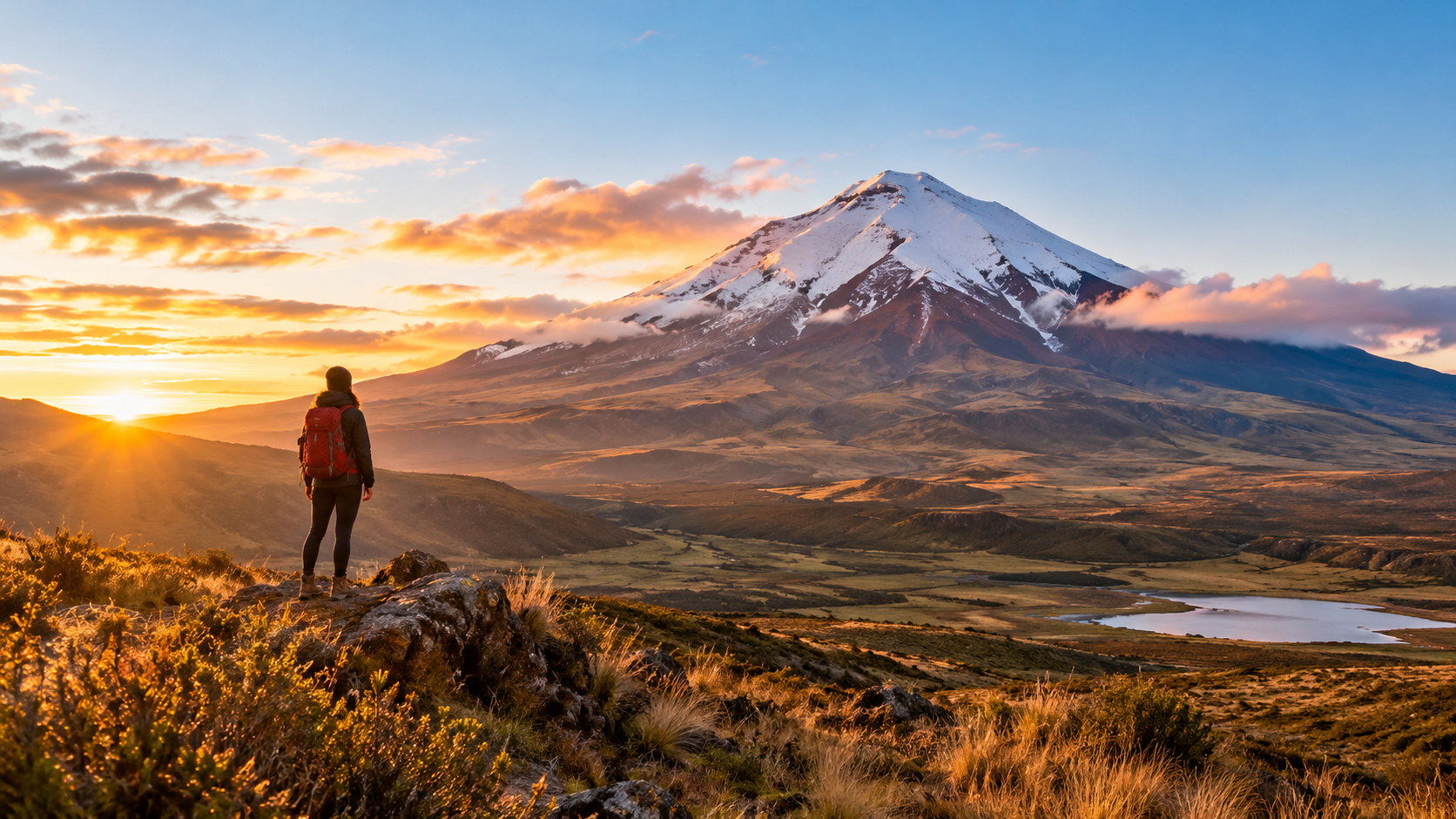
Imagine traveling through a valley where snow-capped peaks rise above farmland, small Andean communities appear between mountains, and some of Ecuador’s most impressive volcanoes dominate the horizon.
This is the Avenue of the Volcanoes, one of the most remarkable landscapes in the Ecuadorian Andes.
More than 70 volcanoes and mountains are found along this Andean corridor, creating a region filled with páramo ecosystems, lagoons, hiking trails and opportunities for everything from scenic road trips to high-altitude mountaineering.
But what makes this journey special isn’t simply the number of volcanoes. It’s the variety of experiences found between them. One day you might be walking beneath the symmetrical cone of Cotopaxi; another, looking across the turquoise waters of Quilotoa or watching vicuñas wander through the landscapes surrounding Chimborazo.
For travelers who want to experience Ecuador beyond its cities, the Avenue of the Volcanoes offers one of the best introductions to the country’s extraordinary Andean geography.
What Is the Avenue of the Volcanoes in Ecuador?
The Avenue of the Volcanoes is the name given to the remarkable volcanic corridor that runs through Ecuador’s inter-Andean region.
The name is associated with German naturalist and explorer Alexander von Humboldt, who traveled through Ecuador in 1802. Fascinated by the enormous mountains surrounding the Andean valleys, Humboldt described this landscape as the “Avenue of the Volcanoes.” During his time in Ecuador, he explored mountains including Pichincha, Antisana and Cotopaxi and attempted to climb Chimborazo.
Today, traveling through this region reveals much more than volcanoes. The journey passes through high-altitude ecosystems, agricultural landscapes, indigenous communities, protected natural areas and towns that have developed in the shadow of the Andes.
That combination of geology, culture and nature makes the route much more than a collection of mountains.
The Volcanoes You Should Know Along the Route
There are many peaks throughout the Avenue of the Volcanoes, so experiencing every one of them in a single trip isn’t necessary.
Instead, several mountains and volcanic landscapes provide particularly memorable ways to understand the Ecuadorian Andes.
Cotopaxi: Ecuador’s Iconic Volcanic Cone
At 5,897 meters above sea level, Cotopaxi is Ecuador’s second-highest mountain and one of the world’s highest active volcanoes. Its remarkably symmetrical cone has also made it one of the country’s most recognizable natural landmarks.
Visiting Cotopaxi doesn’t necessarily mean climbing to the summit. Travelers can explore Cotopaxi National Park, discover the landscapes around Limpiopungo Lagoon or make their way toward José Rivas Refuge, located at more than 4,800 meters above sea level.
Mountain biking, hiking and horseback riding also offer different ways to experience the surrounding páramo.
For many international visitors, Cotopaxi is the perfect introduction to Ecuador’s high Andes.
Chimborazo: Ecuador’s Highest Mountain
Rising to 6,268 meters, Chimborazo is Ecuador’s highest mountain.
But its elevation isn’t the only reason it is remarkable. Because Earth bulges around the Equator, Chimborazo’s summit is the point on Earth’s surface farthest from the planet’s center.
The landscapes surrounding the mountain are equally memorable. Inside the Chimborazo Fauna Production Reserve, extensive páramo landscapes provide habitat for Andean wildlife, including vicuñas.
Even travelers who have no intention of attempting the summit can experience the scale of the mountain through visits to the reserve, hiking and viewpoints.
Cayambe: Where the Equator Meets the Andes
Cayambe rises to approximately 5,790 meters and is one of the few snow-covered volcanoes crossed by the Equator.
Its location creates one of those geographical details that makes traveling through Ecuador fascinating: tropical latitude and high-altitude snow existing in the same landscape.
Experienced mountaineers can attempt its glacier-covered summit, while other visitors can enjoy panoramic views of the surrounding Andes from areas near the Ruales Oleas Berge Refuge.
Quilotoa: A Lagoon Inside a Volcanic Caldera
Not every unforgettable volcano needs a snow-covered summit.
Quilotoa offers a completely different volcanic landscape: a dramatic caldera containing a striking crater lake.
Standing on the rim and looking down at the water surrounded by steep volcanic walls is one of the most distinctive views in the Ecuadorian Andes.
Travelers can explore viewpoints around the crater, hike in the surrounding landscape and discover nearby Andean communities. Quilotoa is therefore an excellent stop for visitors interested in scenery and culture without technical mountaineering.
Tungurahua: The Volcano Beside Baños
Tungurahua rises above one of Ecuador’s most popular adventure destinations: Baños de Agua Santa.
The volcano forms part of a broader landscape where the Andes begin transitioning toward the Amazon basin. The region around Tungurahua combines dramatic mountains with waterfalls, forests and deep valleys.
Nearby Baños adds an entirely different experience to a volcano-focused journey, with activities such as rafting, canyoning, zip-lining, the Waterfall Route and thermal baths.
It is a reminder that traveling through the Avenue of the Volcanoes isn’t only about looking at mountains. Each region offers its own way of experiencing the Andes.
What Can You Do Along the Avenue of the Volcanoes?
One of the biggest advantages of this region is that you don’t need to be an experienced mountaineer to enjoy it.
The Avenue of the Volcanoes can be as adventurous or as relaxed as you want it to be.
Hiking and Trekking
Trails throughout the Andes allow travelers to explore páramo, lagoons, volcanic valleys and mountain refuges. The difficulty varies considerably, making it possible to find everything from relatively accessible walks to demanding high-altitude routes.
Mountain Biking
Cycling provides another perspective on the Andean landscape. Routes around volcanic areas can combine open páramo, mountain roads and enormous views of surrounding peaks.
Wildlife and Nature Photography
The high Andes are home to specialized ecosystems and wildlife. Around Chimborazo, for example, travelers may encounter vicuñas roaming through the páramo. Other protected areas offer opportunities to observe Andean birds and native vegetation.
For photographers, the changing weather, enormous mountains and open landscapes create constantly changing scenes.
Mountaineering
For experienced travelers, Ecuador offers significant opportunities for high-altitude climbing.
Peaks such as Cayambe, Cotopaxi and Chimborazo require proper acclimatization, equipment, physical preparation and professional guidance. These mountains shouldn’t be approached like ordinary hiking destinations.
Do You Need to Climb a Volcano to Enjoy the Route?
Absolutely not.
This is one of the most important things to understand when planning an Avenue of the Volcanoes trip.
You can experience the Andes through scenic drives, lagoons, short hikes, local communities, photography, wildlife observation and viewpoints without attempting a technical summit.
That makes the region suitable for very different travelers, from adventure enthusiasts to couples, families, photographers and nature lovers.
The best itinerary isn’t necessarily the one that includes the most mountains. It’s the one that matches your interests, physical condition and preferred pace.
How Many Days Do You Need for the Avenue of the Volcanoes?
There is no single itinerary that defines the Avenue of the Volcanoes.
A shorter trip might focus on Cotopaxi and Quilotoa, while travelers with more time can continue south toward Baños, Chimborazo and other areas of the central Andes.
For most visitors, allowing several days rather than treating the region as a single day trip creates a much richer experience.
It gives you time to adjust to altitude, explore different landscapes and enjoy the journey between destinations rather than simply moving from one attraction to another.
What Should You Pack for the Ecuadorian Andes?
Weather at high altitude can change quickly, and conditions can feel very different from those in Quito or Ecuador’s lower regions.
A practical packing list should include layered clothing, a waterproof outer layer, comfortable walking shoes, sun protection, water and a small backpack.
Thermal clothing becomes especially important when visiting higher elevations. Ecuador’s official tourism information, for example, recommends warm clothing for Cotopaxi, where the refuge is located above 4,800 meters.
Altitude should also be taken seriously. Give your body time to adjust and choose activities appropriate for your physical condition.
Why the Avenue of the Volcanoes Belongs on an Ecuador Itinerary
The Avenue of the Volcanoes captures something that makes Ecuador unusual as a destination: enormous geographical diversity within relatively short distances.
Here, volcanoes aren’t isolated attractions.
They shape the landscape, ecosystems, communities and experiences found throughout the Andes.
You can stand beneath a snow-covered peak, walk through páramo, look into a volcanic crater, discover an Andean town and continue toward an entirely different ecosystem as the journey progresses.
And perhaps that is the best reason to travel this route.
You aren’t simply visiting a collection of famous volcanoes.
You’re traveling through the heart of the Ecuadorian Andes.
Discover the Avenue of the Volcanoes with Four Worlds
Every traveler experiences the Andes differently.
Some want adventure. Others prefer photography, wildlife, culture or simply the opportunity to slow down and enjoy the landscape.
At Four Worlds, we help travelers discover Ecuador through personalized journeys designed around their interests, pace and expectations.

Recent Posts
Cuicocha Ecuador: Discover a Volcanic Crater in the Andes
Avenue of the Volcanoes Ecuador: A Journey Through the Heart of the Andes